Contact Information
There are hundreds of military bases scattered all throughout the United States as well as many other countries. They are owned and operated by each of the five branches of the military. Among these bases is Fort Hunter Liggett, one of four bases operated under the Army in the state of California.
Fort Hunter Liggett Geography
Fort Hunter Liggett is located in Southern Monterey Country, California, approximately 250 miles north of Los Angeles and 150 miles south of San Francisco. The fort is bordered on the north by the Salinas Valley, on the east by Los Padres National Forest, on the west by Monterey, and on the south by San Luis Obispo. It is the largest reserve command post in the country, with over 165,000 acres of land. The fort used to be larger; however, 52 acres of land was donate by the army base to Mission San Antonio de Padua, a Christian religious institution. The army base has also been involved with several trades with the United States National Park Service, donating land to Los Padres National Forest. The fort is also surrounded by Junipero Serra Peak, formerly known as Santa Lucia Peak, and contains part of the Naciemento River.
Fort Hunter Liggett Camping, Hunting, and Fishing
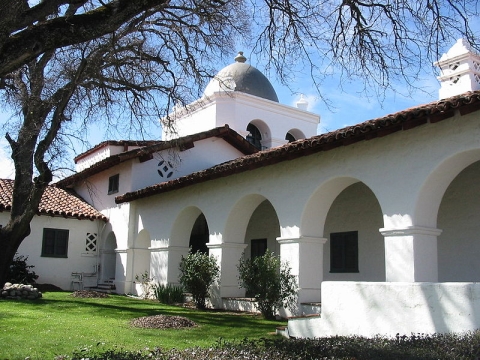
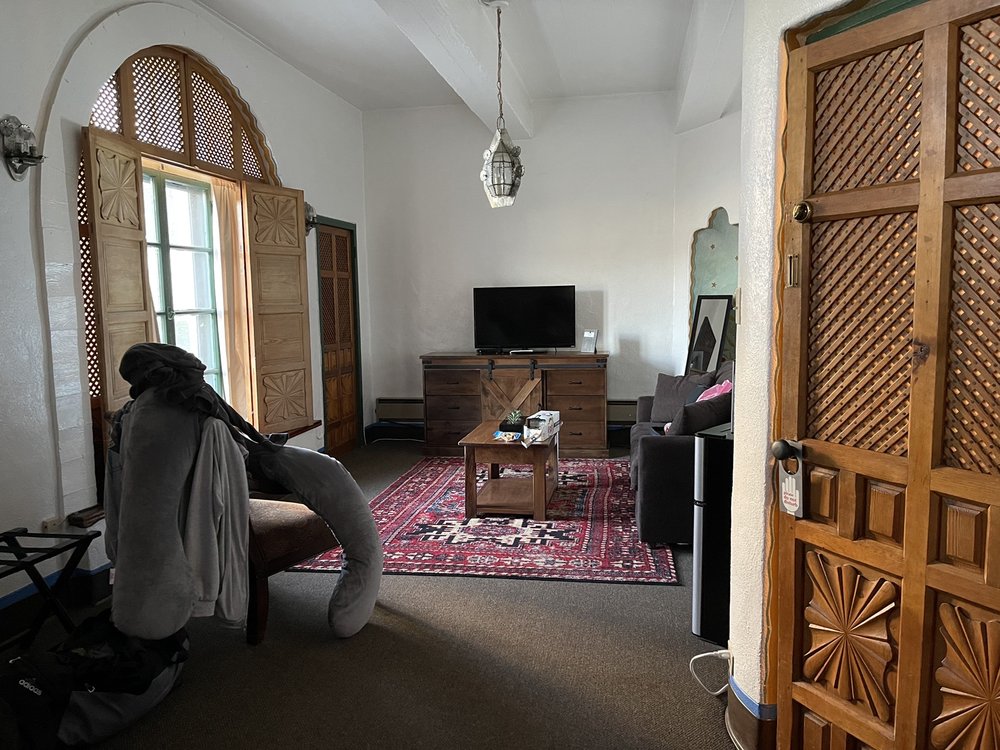
The base itself is known for its scenic qualities and plays host to campers throughout the year. Located on base is the historic hotel known as the The Hacienda, which is open to the general public. The Hacienda was built back in 1930 by William Randolph Hurst as temporary housing for his employees and guests. It includes offices, swimming, guest rooms, and tennis court. It is currently owned and operated by the army, and serves as housing for guests of those on base as well as other civilians. Near The Hacienda are what are known as the Primitive Campgrounds, which house a few camper trailers as well as FEMA trailers.
Commercial camping is offered in the base’s BBQ pit area on Infantry Road. The campgrounds are open to RVs and trailers. They are equipped with shade, BBQ pits, toilets, and showers. Fort Hunter Liggett’s campsites have become a favorite among hunters and fishermen. While training is out of session, they can be found hunting bobcats, rabbits, and birds. Hunting is done through a strict permit system, the average permit costing roughly $100 annually.
The History of Fort Hunter Liggett
Fort Hunter Liggett was born in the 1940s. The land the fort is built on was purchased from William Randolph Hearst and a few other landowners. It was under the authority of Camp Roberts, California until around 1952 when it became part of Fort Ord. Later in the century it came to serve two main purposes: a training area for the 7th Light Infantry Division and the home of the USACDEC (or CDEC or Training and Experimentation Command). The primary function of CDEC was to test and evaluate new weapons systems designed by the Army and Marine Corps. They did this by providing a simulated Soviet Mechanized Rifle Company to act as opposing forces. This system of testing is what validated the Marine’s LAV vehicle.
When Fort Ord closed down in 1991, Fort Hunter Liggett was transferred from the Army to the Army Reserves, which made it a sub-installation of For McCoy, located in Wisconsin. It is still under the operation of the Army Reserves today.
Fort Hunter Liggett’s Purpose
Fort Hunter Liggett is, first and foremost, a training facility. Its terrain makes it ideal for armored task force maneuvers as well as aviation training. Its equipped for multiple ranges for weapons’ usage and live ammo use. The fort also contains Crocker Range which is open for public use. The base is home to helipads as well as 33 drop zones, allowing for battalion sized mass attacks and sling load operations that would not be possible elsewhere. The base’s massive square mileage allows for mission simulations and training to be carried out with minimal disruption to the surrounding areas. It is one of a few bases that has served the United States Navy, Marine Corps, Airforce, and National Guard training.
Fort Hunter Liggett is one of the least-densely populated Army bases in the nation, housing only about 250 permanent Army and civil personnel. During training seasons, however, this number can climb up to around 4,000 residents. The constant flux is due to the fact that the base houses soldiers from several military branches rather than just one.
The base contains: C-130 Assault strip for aviation training, Multi-purpose range complex, Regulation Army heliport with 36 operational helipads, Mess Hall, PX, Chemical Demo Range, Hand Grenade Range, Training Area for mechanized combat operations and lane training.
Recently, in an effort to enhance inter-military relations and utilization of military ranges, the Department of the Navy announced a proposal to build the Doolittle Aircraft Training Area, in honor of James “Jimmy Doolittle,” the leader of the Doolittle Raid in 1942. Among the modifications included in constructing the Doolittle Training Area would be the inclusion of a 250-foot radius bullseye inside the weapons employment area for target practice.
Fort Hunter Liggett in Pop Culture
Fort Hunter Liggett has been used as the setting for several popular films, including We Were Soldiers, starring Mel Gibson, and Clear and Present Danger, with Harrison Ford. It was also the site used in the 1966 horror film, Incubus, before the grounds were sold to the Mission San Antonio de Padua. Its massive landscape and variety of different ecological settings make the base ideal for shooting movies.
Fort Hunter Liggett remains the largest and one of the most well respected military training facilities in the nation. Its ability to house many different types of training in its facilities makes it a unique asset to the United States military. Its vast, natural resources also make it the ideal destination for gamesmen looking hunters and fisherman alike. Its capabilities as a training ground, weapons-testing facility, and army reserves command post qualify Fort Hunter Liggett a one of a kind base that will continue to serve the armed forces for years to come.