Contact Information
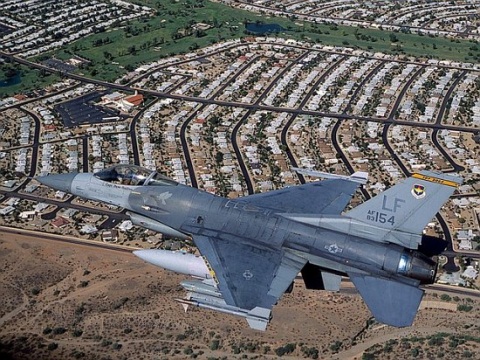
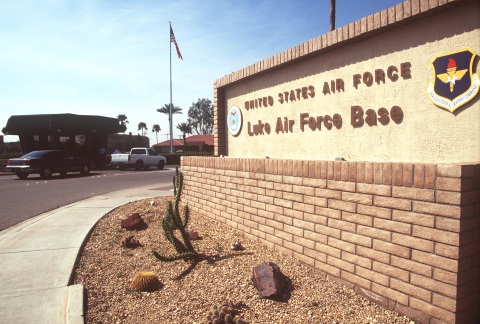
Luke AFB is an Air Force operated base close to Phoenix and Glendale. It is one of the largest bases in the world and the only one out there that can successfully train F-16 Falcon pilots. It has more than 200 units available for training and potential missions. In other words, it is a very strategic point of the United States map. However, the training missions are about to change soon, as the Air Force has recently announced the plans to replace the powerful F-16 Falcon planes with the more advanced F-35 Lightning II units. The replacement dates were not announced though.
The base is run and inhabited by the 56th Fighter Wing, which consists of four different groups. The numbers this base can brag with include around 500 graduate pilots every year, with not less than 700 technicians over the same period of time. All of these pilots are sent to fight in various missions around the world.
History
The base was named after Lieutenant Frank Luke Jr., one of the American aces during World War I. The plans to raise it started in 1940, when the Air Force sent an engineer to pick up the best spot in Arizona for a base. The first building was the Litchfield Park base. The name was released by a completely different base from Hawaii for this one to take it over. Throughout World War II, the new base was the most important one in the United States. A large number of professional trainers was deployed there to train and help graduate more than 12,000 pilots every year. The base has one of the highest graduating ranks in the world. In less than 4 years after the construction started, the pilots there had more than a million hours in the air. In 1946, as World War II was getting to an end, the number of pilots dropped to 299. The maintenance costs were no longer justifying the results, therefore Luke AFB Arizona was disestablished. It was reactivated in the ’50s, once with the Korean war. The current F-16 Falcon planes were brought to the base in the ’80s.
Units
Plenty of troops got in an out Luke AFB since 1940. These days, only 5 of them can be found here – 56th medical staff, 56th Fighter Wing staff units, 56th group dealing with the operations, 56th group for the overall maintenance and 56th group for support.
Occasionally, the base hosts temporarily deployed soldiers for advanced training techniques. All of these groups work together in a tight relationship and take the F-16 Falcon piloting beyond the limits.
Housing
The housing system at Luke AFB has been privatized years ago and dealt with by Balfour Beatty Communities. The base has almost 600 homes, which is more than enough for the number of individuals getting there. Every newcomer is placed on a waiting list. Since the system is privatized, things go like in every regular city. The Balfour Beatty Communities deal with real estate operations in order to provide the citizens with the best services.