Contact Information
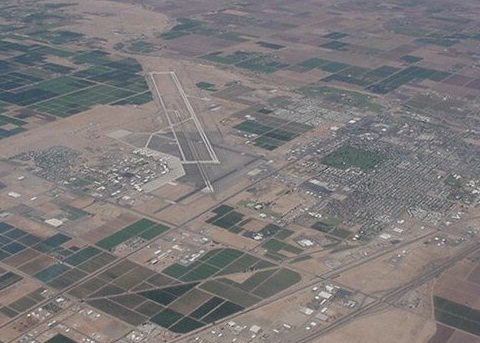
MCAS Yuma, Arizona is located 3 km from Yuma and spreads over 3000 acres. The military base is close to the Yuma international airport, wherewith it shares some facilities. Most of the base area is plain desert wilderness. It supports multiple units and squadrons, making it one of the military bases with the highest importance among the Marine Corps.
History
The construction began in 1928, when the government decided to buy 640 acres in the close surroundings of Yuma. Such a place was heavily searched for. The current location was picked and suggested by Benjamin F. Fly. The authorities built multiple runways, but none of them was modern. They were actually dirt lines in the desert. At the same time, the base was more than just a military installation. It was also used for civilian planes. Its initial name was Fly Field.
The beginning of World War II took the base through a series of new constructions, improvements and upgrades. At the same time, the base was renamed to Yuma Army Airfield. Aside from a professional school, the new base ended up with a huge training center too. Once the war ended, the importance of the base significantly dropped. The gunnery and flight training sessions were discontinued in the spring of 1945. It was the beginning of the end. The base was entirely disestablished by the end of the autumn, same year. It was taken over by the Department of the Interior. About 9 years later, it was reactivated and ready to rumble again, with a new leadership and the latest technologies, including rockets and interceptors.
By 1959, MCAS Yuma was taken over by the Marine Corps and renamed to what it is today three years later. Until this year, it was passed from one group to another, its objectives were constantly changed, while the hosted units came and left without any proper reasons. With a clumping start, the base managed to survive to the test of time and became the most active and busiest training facility run by the Marine Corps. The climate and the weather conditions provide the inhabitants with year round training capabilities, resulting in an excellent facility. Over the years, it has also “suffered” from a few other upgrades. These days, it is scheduled for a massive upgrade, giving the Marine Corps the chance to work with some of the most advanced planes in the world.
Units
MCAS Yuma Arizona is now the home of the Marine Aircraft Group 13 and the MAWTS 1 – Marine Aviation Weapons and Tactics Squadron 1. It also hosts a few tenant units, such as the Marine Wing Support Squadron 371, the Combat Logistics Company 16 or the Marine Aircraft Group 13.
Housing
Prior to being deployed at MCAS Yuma, you might want to learn a little about your accommodation options. Get in touch with the Marine Corps Community Service for newcomers. You will get an informative brochure and an application to fill. The service will also provide you with a sponsor to help you out as you move in.